We use cookies to make this site work. We'd also like to set optional cookies so we can understand how the site is used and improve it. We will not set optional cookies unless you accept them. You can change your choice at any time from the Cookie settings link in the footer.
Strictly necessary cookies
These cookies are required for the site to work. They store your cookie preferences and keep your session secure. They are exempt from consent under PECR Regulation 6(4) because they are essential to deliver the service you have requested.
Optional cookies
Optional cookies help us understand how the site is used and provide additional features such as analytics, accessibility tools and translation. We will only set them if you accept.

British Sign Language & Deaf Awareness
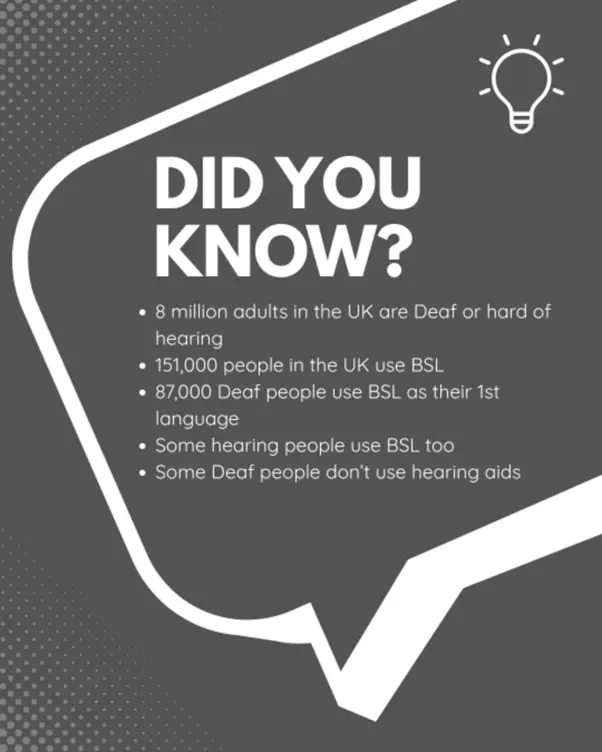
Did you know?
- 8 million adults in the UK are Deaf or hard of hearing
- 151,000 people in the UK use BSL
- 87,000 Deaf people use BSL as their 1st language
- Some hearing people use BSL too
- Some Deaf people don't use hearing aids
Did you know BSL (British Sign Language) is a complete language in its own right - not a version of English?
It was officially recognised in 2003 and became a legally recognised language in the UK in 2022.
There are around 151,000 people in the UK who use British Sign Language (BSL), including 87,000 Deaf BSL users. Many hearing people also sign because they have family or friends who use BSL, or because spoken communication isn’t accessible for them. Some Deaf people may not use hearing aids - either by choice or because they’re not helpful for their type of hearing loss - which makes sign language even more essential.
A lot of Deaf people don’t use traditional feedback methods because forms, phone calls and written English can be inaccessible - especially as BSL (or another signed language) is usually their first language. Many Deaf people also prefer communicating in their native sign language rather than switching to a spoken or written one.
At Brocklebank Practice, we're committed to communicating with all of our patients and making sure they have the best experience possible. Making communication BSL-friendly isn’t just helpful; we feel that it’s what makes services genuinely inclusive.
Do you know anyone who communicates in BSL? How could you make things easier for them?"
Published: Nov 28, 2025